• 0

Month: August 2026

Is Redbubble Worth It in 2026? What 69 Sales Actually Paid Me

I Made $81.51 on Redbubble. Here's What Actually Sold and What I Got Paid

I have not made thousands of dollars on Redbubble. I haven’t even hit $100 in artist earnings yet. What I have done is upload 92 designs, sell 69 products, and rack up $81.51 in artist margin, mostly without lifting a finger to promote the shop.

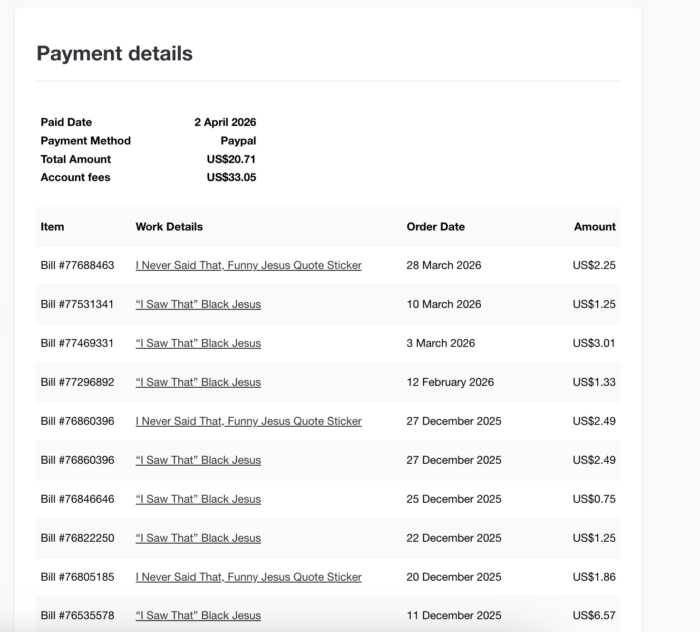
My first actual payment was a lot smaller than that. $20.71.

That gap is exactly why I wanted to write this. Redbubble income sounds simple until you start separating out the number of things sold, the margin your dashboard shows you, the fees that get deducted, and what actually lands in your PayPal account. Those are four different numbers, and I didn’t fully understand that until I sat down and pulled all of mine together. If you’ve read my Broke Tax breakdown, you already know I’m big on showing the real numbers instead of the version that sounds better.

I opened my Redbubble shop sometime around 2024. Honestly I can’t remember the exact date. I made a handful of Pinterest pins for it early on, but my cannabis related pins kept getting flagged, so I deleted them and basically stopped promoting the shop at all.

The sales still came in. Slow, but real, and mostly organic.

Here’s what actually sold, what I earned, and why I’m now thinking about taking my bestselling sticker ideas somewhere other than Redbubble.

This reflects my personal results as of August 4, 2026. Redbubble changes its fees and payment policies pretty often, so check their current terms before you open a shop.

The numbers, all together

Right now my shop sits at 92 uploaded designs and 69 products sold, for $81.51 in cumulative artist margin. Redbubble’s sales history also shows $5.88 in taxes collected, which isn’t income to me since Redbubble collects and remits sales tax where it’s required to.

The $81.51 and the $20.71 payment aren’t from the same period, and I want to be clear about that because it confused me too when I first looked at it. My first payment period covered $53.76 in artist margin. Redbubble took $33.05 in account fees out of that and paid me the remaining $20.71 on April 2, 2026.

After that payment period closed, the shop made another $27.75 in artist margin. That hasn’t been paid to me yet. Redbubble is currently showing $22.50 in fees against those newer earnings, which leaves my account balance sitting at $5.25. No second payment yet, as of today.

So the $81.51 people might assume I’ve pocketed isn’t cash in hand. What I’ve actually received is $20.71. The rest is either fees or an unpaid balance still sitting in my account.

What actually sold

Uploading 92 designs did not mean I had 92 good ideas. A handful of designs did almost all the work.

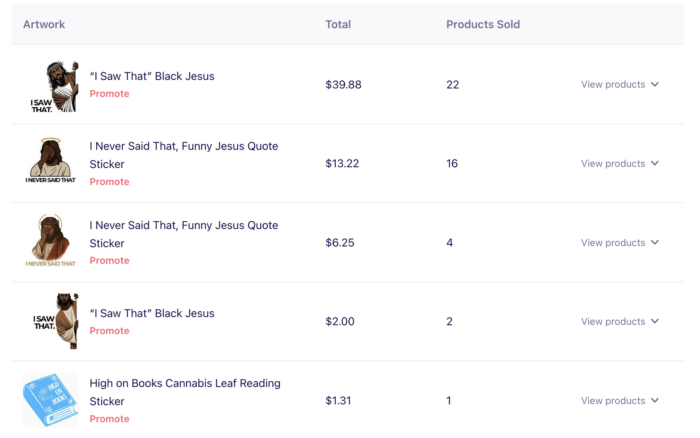
My “I Saw That” Black Jesus sticker, first listing, sold 27 times and brought in $43.66 on its own. The second listing of that same design added another 8 sales and $10.27. My “I Never Said That” sticker sold 16 times on its first listing for $13.22, plus 4 more sales worth $6.25 on a second listing. My Merry Christmas Yorkie listings picked up 9 sales for $4.99. Everything else, a cannabis leaf reading sticker, a coffee and weed design, a fall Yorkie, a wake and bake sticker, added up to a little over $2 combined.

Add it up and the four listings tied to my two Black Jesus concepts brought in 55 of my 69 sales and $73.40 of my $81.51 in margin. That’s around 80% of everything sold and roughly 90% of the money, from designs built around basically one idea.

Why the Black Jesus stickers did the best

I’d seen a similar style of sticker floating around and wanted to make a version with Black Jesus specifically. That small change mattered more than I expected. It was recognizable, funny, and a lot more representative of what I actually wanted to see out there instead of another generic quote sticker.

I can’t tell you exactly why each person bought it, but the results speak for themselves. It outsold everything else in my shop, cannabis stickers, book stuff, my Yorkie designs, by a wide margin.

I’m not saying everyone needs to make religious humor or copy whatever’s trending in someone else’s shop. What I took from it is that specificity gives people an actual reason to pick your design over the hundreds of similar ones sitting next to it. “Funny sticker” is vague. A funny sticker featuring Black Jesus speaks to a very specific person, and that person bought it.

Were these sales even organic?

For the most part, yes. I made a few Pinterest pins when I first opened the shop, but I never kept up a real promotional strategy. Once some of my cannabis pins got flagged, I deleted them and stopped depending on Pinterest to send people to Redbubble. I never ran ads or pushed an existing audience toward the shop either. These 69 sales mostly came from strangers finding my stuff inside Redbubble’s own marketplace.

That’s honestly encouraging. People I’ve never interacted with liked something enough to buy it.

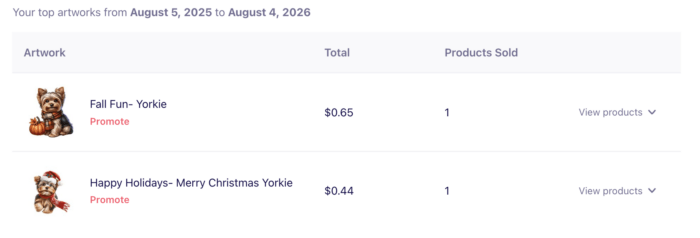
It’s also revealing in a less fun way, because my sales have basically stopped. The shop is still open, but from August 2025 through today, only two designs even showed up in my top artwork report, one sale each. I can’t prove Redbubble changed how it’s showing my listings, but without my own audience or steady outside traffic, I don’t have much control over whether people ever see my work again.

That’s the real downside of building a shop entirely inside someone else’s marketplace. You’re at the mercy of their algorithm, and you find out how much when it stops sending people your way.

My first payment, and what happened after

My first Redbubble payment hit PayPal on April 2, 2026. The total paid was $20.71, and the account fees listed on that same statement were $33.05. So the earnings behind that payment were $53.76 before fees, and around 61.5% of it got taken off the top.

Seeing $33.05 in fees next to a $20.71 payout was a little deflating. I get that Redbubble is handling the marketplace, printing, and shipping, but it’s hard to feel like meaningful income when more than half of it disappears before it reaches you.

After that first payment, the shop kept making occasional sales, adding another $27.75 in margin. But the payment history is now showing $22.50 in fees against that, leaving a balance of $5.25 that I haven’t been paid yet. As of today, the only money Redbubble has actually sent me is that original $20.71.

That’s the whole reason I’m writing this the way I am. An earnings dashboard is not the same thing as money in your account. When I say I made $81.51, I mean that’s the cumulative margin shown across all 69 sales, not $81.51 that’s landed in my PayPal.

For anyone wondering how the fee structure works, Redbubble currently splits accounts into Standard, Premium, and Pro tiers. As of July 31, 2026, Standard artists pay a 50% platform fee, Premium pay 20%, and Pro pay none, with Standard and Premium also facing an extra fee on markups above 20%. You can read Redbubble’s own breakdown of account tiers and how payments get calculated if you want the specifics, since those policies can and do change. What I’m sharing here is my real result from my actual statement, not an estimate based on the current chart.

Redbubble also dropped its payment threshold from $20 to $10 starting July 1, 2026, applied after fees are taken out.

Did I fail at Redbubble?

No, but I also wouldn’t call $81.51 a real income stream.

I put up 92 designs and made 69 sales without already having an audience. That told me two things. People I don’t know were willing to pay for something I made, and a small number of specific ideas had way more potential than the rest.

That’s genuinely useful information. What I did wrong was letting Redbubble be the entire business instead of treating it like a place to test what people want. If I’d built traffic around the winning designs, or sold my bestselling stickers somewhere I actually controlled the customer relationship and kept more of the profit, I think I’d have a very different number to report.

Redbubble handled the annoying parts. I never bought inventory, packed an order, or shipped anything. But that convenience came with thin margins and almost zero control over whether anyone actually sees what I make.

Is it worth it in 2026?

I’d say yes, under two conditions.

It’s genuinely useful if you want low risk experience putting your work into a real marketplace. You get to see what strangers actually respond to and test ideas without spending money on inventory first.

It also makes more sense if you already have an audience you can send to your shop. If you’re relying entirely on Redbubble to bring you customers, your sales are at the mercy of whatever their algorithm decides to show, and you have basically no say in that.

I wouldn’t recommend uploading a ton of designs and assuming passive income just happens. I uploaded 92 and two closely related ideas made almost 90% of my money. Redbubble was a solid testing ground. I’m just not convinced anymore that it should be the final home for my best stuff.

What I’d do differently

If I were starting over, I’d pay attention to early signs of demand a lot faster. The moment the Black Jesus designs started clearly outselling everything else, I should have treated that as real market research, better photos, content built around that collection, and a sales channel where I had more say over who saw it and what I kept.

That’s what I’m considering now. Instead of uploading more designs and hoping Redbubble decides to promote them, I’m thinking about ordering my bestselling stickers myself and selling them somewhere I can actually put some intention behind getting eyes on them.

That means upfront cost and the hassle of holding and shipping inventory myself, so I wouldn’t start with hundreds of stickers. A small test order would let me check the quality, figure out my real profit per sticker, and see if people will buy directly from me instead of through Redbubble.

The goal isn’t to throw away what Redbubble proved. It’s to actually use it, especially since every bit of extra income matters when you’re juggling more than one type of debt on a single income like I am.

Quick answers, since people always ask


How much did I make from Redbubble?

$81.51 in cumulative artist margin from 69 products sold, as of August 4, 2026. $53.76 of that was tied to my first payment period, and another $27.75 came in afterward, with $22.50 in fees against it and a current balance of $5.25.

How much was my first payment?

$20.71 through PayPal on April 2, 2026, with $33.05 in account fees showing on that same statement.

Have I gotten all $81.51?

No. I’ve received one payment of $20.71. The rest is either fees or sitting in my account as an unpaid $5.25 balance.

How many designs did I upload?

92. Most never sold. Two related Black Jesus concepts brought in 55 of my 69 total sales.

Can you sell on Redbubble without an audience?

I did. I made a few Pinterest pins early on and deleted them pretty quickly, so almost everything came through Redbubble’s own marketplace. That said, sales have slowed a lot, and I don’t have another source of traffic to fall back on.

What sold best?

My Black Jesus designs, no contest. Those four listings brought in $73.40 of my $81.51 total.

Is this passive income?

It can keep making sales after the upload work is done, but I wouldn’t call it reliable or guaranteed. Visibility can change, fees eat into what you make, and most of what I uploaded never sold at all.

Final thoughts

I didn’t hit the big dramatic numbers people throw around in “how to make money on Redbubble” posts. I made $81.51 in cumulative margin. I got paid $20.71 of that. Another $27.75 came in after, but $22.50 in fees left me with a $5.25 balance I’m still waiting on. And 92 uploaded designs mattered a lot less than just finding two ideas people actually wanted.

That’s not a failure. It’s proof that there’s demand, just on a small scale right now.

My next move isn’t uploading another 92 designs. It’s taking the ones that already proved themselves, putting them somewhere with more eyes on them, and keeping more of what they’re worth.

You can check out my shop, AshleyJaneCo on Redbubble, if you want to see what’s still up!

MWAH Vapes: The Lip Gloss-Shaped Cannabis Pens That Are on My Radar

MWAH Vapes: The Lip Gloss-Shaped Cannabis Pens That Are on My Radar

This article was originally written before I tried MWAH and has since been updated with my firsthand experience. I purchased the products myself and was not paid or sponsored. Cannabis affects everyone differently. This article is for adults 21 and older.

Every once in a while, I see a cannabis product that makes me stop scrolling, not because it promises to be the strongest thing on the shelf, but because someone clearly thought about the person who would carry it. That is what happened with MWAH. I was scrolling on Twitter (yes, Twitter) and I saw the lip gloss shaped weed pen and instantly needed it in my life.

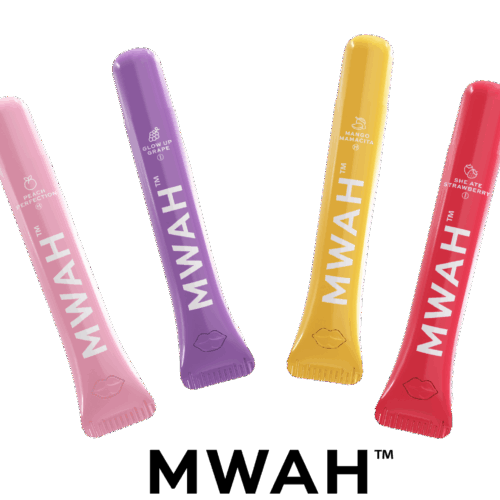
MWAH makes cannabis vape pens that look more like lip gloss than the usual black, silver, or neon disposable. The packaging is polished, the flavor names are playful, and the entire brand feels like it was designed with women in mind instead of having pink added at the end of the process. When I first wrote this article, I hadn’t tried one yet. Since then, I’ve bought the full eight-flavor lineup and started reviewing them individually, beginning with my MWAH It’s Giving Guava review.

What Are MWAH Vapes?

MWAH is a cannabis brand that currently makes 1-gram all-in-one vape pens. The device, battery, heating element, and cannabis oil are contained in one unit, so there is no separate cartridge or battery to purchase.

According to the brand and current retailer listings, the pens are:

  • Shaped like lip gloss
  • Auto-draw once powered on, with a lip-shaped control for power and reheat
  • Made with a ceramic heating element
  • Available in eight fruit-forward flavors
  • Sold through licensed cannabis retailers in Washington and California

The lip gloss design is what gets the initial attention, but the all-in-one format is part of the appeal too. You do not have to match a cartridge to a battery, change voltage settings, or carry multiple pieces.

Of course, pretty packaging does not automatically mean the oil or hardware is good. That is the part I will only be able to judge after trying one.

Why MWAH Immediately Caught My Attention

I have complained before that cannabis brands rarely make genuinely cute products for women.

There are plenty of accessories covered in pink glitter, giant cannabis leaves, or phrases that feel like someone tried too hard to make them “for girls.” That is different from creating something stylish from the beginning.

MWAH appears to understand that distinction. The pens are small, polished, and meant to blend naturally into a bag alongside lip balm, a compact, or actual lip gloss. Even the flavor names, like She Ate Strawberry and It’s Giving Guava, feel consistent with the brand instead of being randomly placed on a standard vape. That is what I wish more cannabis companies would consider.

Additionally, I understand why some people see a lip gloss-shaped cannabis vape and worry that it could appeal to teenagers or be mistaken for a cosmetic. That concern deserves to be taken seriously but cute is not automatically the same as childish. Adults are allowed to enjoy color, playfulness, and a whimsical canna products too. The responsibility is on brands to market these products clearly to adults and on consumers to keep cannabis secured, in its original packaging, and away from children and teens. We should not have to give up everything playful about our taste to prove that we are responsible adults.

Function matters, but cannabis accessories and devices are still objects people carry, store, and look at. Wanting those products to reflect your taste is not unreasonable. That same balance of function and personality shaped my guide to the best weed grinders, including options for different budgets, needs, and styles. Check it out here!

The Eight MWAH Flavors

MWAH has since expanded the lineup to eight flavors, adding Strawberry Matcha and Watermelon Wifey to the original six. I ended up buying the entire collection, so if you want to see all eight together, I put them in my full MWAH lip gloss vape haul and lineup post.

MWAH VapeTypeBrand’s Flavor Description
It’s Giving GuavaSativaCrisp guava, tropical and light
Berry BaddieSativaBold berries, sweet and tart
Mango MamacitaHybridSun-kissed mango, bright and juicy
Peach PerfectionHybridFresh peach, smooth and balanced
She Ate StrawberryIndicaStrawberry cream, soft and sweet
Glow Up GrapeIndicaConcord grape, plush and jammy
Strawberry MatchaHybridSweet strawberry. Creamy, earthy, smooth.
Watermelon WifeyIndicaJuicy watermelon. Sweet, crisp, refreshing.

The names are fun, but I would not choose solely from the name or color. The sativa, hybrid, and indica labels may help narrow the list, while the batch-specific cannabinoid information on the dispensary menu gives you more concrete information about the exact product being sold.

When I first wrote this article, She Ate Strawberry was the flavor I thought I’d reach for first based on the description alone. I ended up starting with It’s Giving Guava instead, and that became my first full MWAH review.

Are MWAH Vapes Disposables or Cartridges?

MWAH’s current products are all-in-one disposable vape pens, not standard 510-thread cartridges.

That means the cannabis oil and battery come together in the lip gloss-shaped device. You do not need a separate battery, but the entire unit is replaced when the oil is finished.

An all-in-one can be convenient, especially for someone who does not already own vape hardware. The tradeoff is that the device creates more waste than replacing a cartridge or refilling a reusable system.

One thing I’m still watching as I work through the collection is whether the hardware remains reliable through the full gram of oil.

What I Wanted to Know Before Trying MWAH

The aesthetic is enough to make me curious. It is not enough for me to recommend the product.

These are the questions I plan to answer when I can finally try one:

Does the hardware work consistently?

I want to know whether it draws smoothly, stays unclogged, and continues working until the oil is finished. Hardware reliability matters more than how pretty the pen looks.

How strong is the flavor?

MWAH is clearly leaning into fruit-forward flavors. I want to know whether those flavors feel enjoyable and balanced or become too sweet and artificial.

Is the oil smooth?

I will pay attention to how harsh or smooth the vapor feels at a normal draw. I am not interested in taking the biggest possible hit just to prove that a vape is potent.

Does the design hold up in a bag?

The lip gloss shape is part of the appeal, so I want to know whether the device stays clean, avoids leaking, and still looks good after being carried.

It is also worth stating the obvious: because it resembles a cosmetic, it should always be stored securely, clearly separated from real cosmetics, and kept away from children and anyone under 21.

Is it worth the price?

Retail prices vary by store, location, taxes, and promotions. Current licensed-retailer menus show that MWAH is generally positioned above the cheapest disposable options. I would pay more for a design I genuinely like if the oil and hardware also perform well. I would not pay a premium for packaging alone.

Where Can You Buy MWAH Vapes?

As of August 2026, MWAH says its products are licensed in Washington and California. The brand’s store locator is the best starting point, while live dispensary menus can confirm which flavors are actually in stock and show the cannabinoid information for the current batch.

Availability and pricing can change quickly, so I would check the menu before driving to a store. A retailer carrying MWAH does not guarantee that all eight flavors will be available that day.

What Happened After I Finally Tried MWAH

When I originally wrote this article, everything I knew about MWAH came from researching the brand and figuring out why these lip-gloss-shaped vapes had caught my attention so quickly. I had plenty of questions about the flavor, smoothness, hardware and whether the actual cannabis could live up to the design.

Now I can actually answer some of them.

It’s Giving Guava was the first flavor I spent real time with, and it surprised me enough that I wrote a full MWAH It’s Giving Guava review. I also bought the entire eight-flavor lineup, including Strawberry Matcha and Watermelon Wifey, which you can see in my MWAH lip gloss vape haul.

I’m working through the collection one flavor at a time instead of pretending I can rank eight vapes after a few quick hits. This original post can stay as the beginning of the story the part where I first saw MWAH and wanted to know whether the cute packaging was hiding an actually good vape.

Did My First Impression of MWAH Hold Up?

Mostly, yes.

MWAH originally caught my attention because the brand felt more intentional than a lot of cannabis products that are simply made pink and marketed toward women. The lip-gloss shape, playful names and overall design still feel like a real part of the product rather than something added afterward.

Now that I’ve actually bought the full lineup and started using them, the bigger question is whether the cannabis itself can live up to that first impression. It’s Giving Guava gave me a pretty good start, but I’m still working through the rest of the flavors before I decide how I feel about the collection as a whole.

For now, I still think MWAH has one of the more interesting cannabis product concepts I’ve come across. The difference is that I no longer have to judge it from the outside.

Frequently Asked Questions About MWAH Vapes

What is a MWAH vape?

MWAH makes 1-gram, all-in-one cannabis vape pens shaped like lip gloss. The current collection includes eight fruit-forward options across sativa, hybrid, and indica categories.

Are MWAH pens rechargeable?

Yes. MWAH pens are rechargeable all-in-one devices with a usb-c charging port on the side. The lip-shaped control is used to turn the device on and off and activate the reheat function.

How many MWAH flavors are there?

MWAH currently has eight flavors: It’s Giving Guava, Berry Baddie, Mango Mamacita, Peach Perfection, She Ate Strawberry, Glow Up Grape, Strawberry Matcha and Watermelon Wifey.

Where is MWAH available?

As of August 2026, MWAH states that it is licensed in Washington and California and sold through licensed cannabis retailers.

Have I tried MWAH yet?

Yes, and I’m ECSTATIC! I started with It’s Giving Guava and have since bought the full eight-flavor lineup. You can read my It’s Giving Guava review or see the entire collection in my MWAH vape haul.

If you’re curious about MWAH beyond the first-impression stage, I’ve now started reviewing the flavors individually and also put together the full eight-vape lineup. You can read my It’s Giving Guava review, see my full MWAH lip gloss vape haul, or use the MWAH store locator to check whether they’re available near you.