• 0

Author: Ashley Jane

Is Redbubble Worth It in 2026? What 69 Sales Actually Paid Me

I Made $81.51 on Redbubble. Here's What Actually Sold and What I Got Paid

I have not made thousands of dollars on Redbubble. I haven’t even hit $100 in artist earnings yet. What I have done is upload 92 designs, sell 69 products, and rack up $81.51 in artist margin, mostly without lifting a finger to promote the shop.

My first actual payment was a lot smaller than that. $20.71.

That gap is exactly why I wanted to write this. Redbubble income sounds simple until you start separating out the number of things sold, the margin your dashboard shows you, the fees that get deducted, and what actually lands in your PayPal account. Those are four different numbers, and I didn’t fully understand that until I sat down and pulled all of mine together. If you’ve read my Broke Tax breakdown, you already know I’m big on showing the real numbers instead of the version that sounds better.

I opened my Redbubble shop sometime around 2024. Honestly I can’t remember the exact date. I made a handful of Pinterest pins for it early on, but my cannabis related pins kept getting flagged, so I deleted them and basically stopped promoting the shop at all.

The sales still came in. Slow, but real, and mostly organic.

Here’s what actually sold, what I earned, and why I’m now thinking about taking my bestselling sticker ideas somewhere other than Redbubble.

This reflects my personal results as of August 4, 2026. Redbubble changes its fees and payment policies pretty often, so check their current terms before you open a shop.

The numbers, all together

Right now my shop sits at 92 uploaded designs and 69 products sold, for $81.51 in cumulative artist margin. Redbubble’s sales history also shows $5.88 in taxes collected, which isn’t income to me since Redbubble collects and remits sales tax where it’s required to.

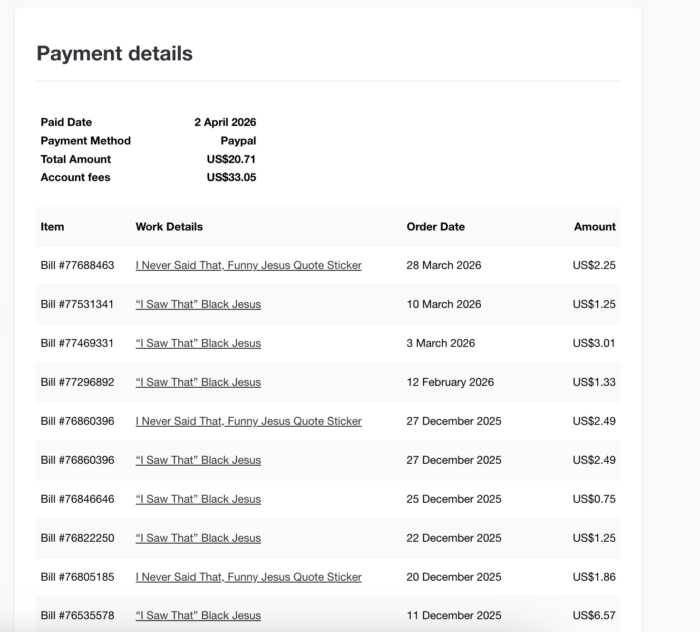
The $81.51 and the $20.71 payment aren’t from the same period, and I want to be clear about that because it confused me too when I first looked at it. My first payment period covered $53.76 in artist margin. Redbubble took $33.05 in account fees out of that and paid me the remaining $20.71 on April 2, 2026.

After that payment period closed, the shop made another $27.75 in artist margin. That hasn’t been paid to me yet. Redbubble is currently showing $22.50 in fees against those newer earnings, which leaves my account balance sitting at $5.25. No second payment yet, as of today.

So the $81.51 people might assume I’ve pocketed isn’t cash in hand. What I’ve actually received is $20.71. The rest is either fees or an unpaid balance still sitting in my account.

What actually sold

Uploading 92 designs did not mean I had 92 good ideas. A handful of designs did almost all the work.

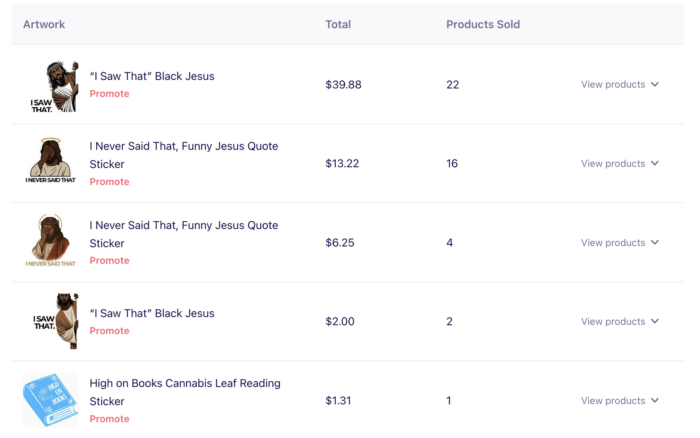
My “I Saw That” Black Jesus sticker, first listing, sold 27 times and brought in $43.66 on its own. The second listing of that same design added another 8 sales and $10.27. My “I Never Said That” sticker sold 16 times on its first listing for $13.22, plus 4 more sales worth $6.25 on a second listing. My Merry Christmas Yorkie listings picked up 9 sales for $4.99. Everything else, a cannabis leaf reading sticker, a coffee and weed design, a fall Yorkie, a wake and bake sticker, added up to a little over $2 combined.

Add it up and the four listings tied to my two Black Jesus concepts brought in 55 of my 69 sales and $73.40 of my $81.51 in margin. That’s around 80% of everything sold and roughly 90% of the money, from designs built around basically one idea.

Why the Black Jesus stickers did the best

I’d seen a similar style of sticker floating around and wanted to make a version with Black Jesus specifically. That small change mattered more than I expected. It was recognizable, funny, and a lot more representative of what I actually wanted to see out there instead of another generic quote sticker.

I can’t tell you exactly why each person bought it, but the results speak for themselves. It outsold everything else in my shop, cannabis stickers, book stuff, my Yorkie designs, by a wide margin.

I’m not saying everyone needs to make religious humor or copy whatever’s trending in someone else’s shop. What I took from it is that specificity gives people an actual reason to pick your design over the hundreds of similar ones sitting next to it. “Funny sticker” is vague. A funny sticker featuring Black Jesus speaks to a very specific person, and that person bought it.

Were these sales even organic?

For the most part, yes. I made a few Pinterest pins when I first opened the shop, but I never kept up a real promotional strategy. Once some of my cannabis pins got flagged, I deleted them and stopped depending on Pinterest to send people to Redbubble. I never ran ads or pushed an existing audience toward the shop either. These 69 sales mostly came from strangers finding my stuff inside Redbubble’s own marketplace.

That’s honestly encouraging. People I’ve never interacted with liked something enough to buy it.

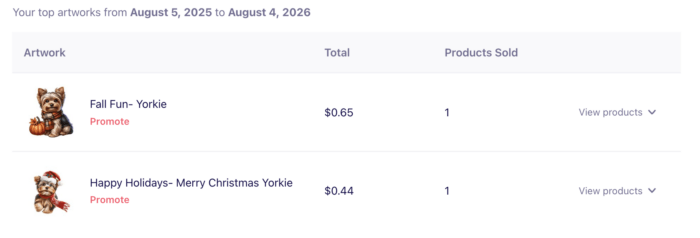
It’s also revealing in a less fun way, because my sales have basically stopped. The shop is still open, but from August 2025 through today, only two designs even showed up in my top artwork report, one sale each. I can’t prove Redbubble changed how it’s showing my listings, but without my own audience or steady outside traffic, I don’t have much control over whether people ever see my work again.

That’s the real downside of building a shop entirely inside someone else’s marketplace. You’re at the mercy of their algorithm, and you find out how much when it stops sending people your way.

My first payment, and what happened after

My first Redbubble payment hit PayPal on April 2, 2026. The total paid was $20.71, and the account fees listed on that same statement were $33.05. So the earnings behind that payment were $53.76 before fees, and around 61.5% of it got taken off the top.

Seeing $33.05 in fees next to a $20.71 payout was a little deflating. I get that Redbubble is handling the marketplace, printing, and shipping, but it’s hard to feel like meaningful income when more than half of it disappears before it reaches you.

After that first payment, the shop kept making occasional sales, adding another $27.75 in margin. But the payment history is now showing $22.50 in fees against that, leaving a balance of $5.25 that I haven’t been paid yet. As of today, the only money Redbubble has actually sent me is that original $20.71.

That’s the whole reason I’m writing this the way I am. An earnings dashboard is not the same thing as money in your account. When I say I made $81.51, I mean that’s the cumulative margin shown across all 69 sales, not $81.51 that’s landed in my PayPal.

For anyone wondering how the fee structure works, Redbubble currently splits accounts into Standard, Premium, and Pro tiers. As of July 31, 2026, Standard artists pay a 50% platform fee, Premium pay 20%, and Pro pay none, with Standard and Premium also facing an extra fee on markups above 20%. You can read Redbubble’s own breakdown of account tiers and how payments get calculated if you want the specifics, since those policies can and do change. What I’m sharing here is my real result from my actual statement, not an estimate based on the current chart.

Redbubble also dropped its payment threshold from $20 to $10 starting July 1, 2026, applied after fees are taken out.

Did I fail at Redbubble?

No, but I also wouldn’t call $81.51 a real income stream.

I put up 92 designs and made 69 sales without already having an audience. That told me two things. People I don’t know were willing to pay for something I made, and a small number of specific ideas had way more potential than the rest.

That’s genuinely useful information. What I did wrong was letting Redbubble be the entire business instead of treating it like a place to test what people want. If I’d built traffic around the winning designs, or sold my bestselling stickers somewhere I actually controlled the customer relationship and kept more of the profit, I think I’d have a very different number to report.

Redbubble handled the annoying parts. I never bought inventory, packed an order, or shipped anything. But that convenience came with thin margins and almost zero control over whether anyone actually sees what I make.

Is it worth it in 2026?

I’d say yes, under two conditions.

It’s genuinely useful if you want low risk experience putting your work into a real marketplace. You get to see what strangers actually respond to and test ideas without spending money on inventory first.

It also makes more sense if you already have an audience you can send to your shop. If you’re relying entirely on Redbubble to bring you customers, your sales are at the mercy of whatever their algorithm decides to show, and you have basically no say in that.

I wouldn’t recommend uploading a ton of designs and assuming passive income just happens. I uploaded 92 and two closely related ideas made almost 90% of my money. Redbubble was a solid testing ground. I’m just not convinced anymore that it should be the final home for my best stuff.

What I’d do differently

If I were starting over, I’d pay attention to early signs of demand a lot faster. The moment the Black Jesus designs started clearly outselling everything else, I should have treated that as real market research, better photos, content built around that collection, and a sales channel where I had more say over who saw it and what I kept.

That’s what I’m considering now. Instead of uploading more designs and hoping Redbubble decides to promote them, I’m thinking about ordering my bestselling stickers myself and selling them somewhere I can actually put some intention behind getting eyes on them.

That means upfront cost and the hassle of holding and shipping inventory myself, so I wouldn’t start with hundreds of stickers. A small test order would let me check the quality, figure out my real profit per sticker, and see if people will buy directly from me instead of through Redbubble.

The goal isn’t to throw away what Redbubble proved. It’s to actually use it, especially since every bit of extra income matters when you’re juggling more than one type of debt on a single income like I am.

Quick answers, since people always ask


How much did I make from Redbubble?

$81.51 in cumulative artist margin from 69 products sold, as of August 4, 2026. $53.76 of that was tied to my first payment period, and another $27.75 came in afterward, with $22.50 in fees against it and a current balance of $5.25.

How much was my first payment?

$20.71 through PayPal on April 2, 2026, with $33.05 in account fees showing on that same statement.

Have I gotten all $81.51?

No. I’ve received one payment of $20.71. The rest is either fees or sitting in my account as an unpaid $5.25 balance.

How many designs did I upload?

92. Most never sold. Two related Black Jesus concepts brought in 55 of my 69 total sales.

Can you sell on Redbubble without an audience?

I did. I made a few Pinterest pins early on and deleted them pretty quickly, so almost everything came through Redbubble’s own marketplace. That said, sales have slowed a lot, and I don’t have another source of traffic to fall back on.

What sold best?

My Black Jesus designs, no contest. Those four listings brought in $73.40 of my $81.51 total.

Is this passive income?

It can keep making sales after the upload work is done, but I wouldn’t call it reliable or guaranteed. Visibility can change, fees eat into what you make, and most of what I uploaded never sold at all.

Final thoughts

I didn’t hit the big dramatic numbers people throw around in “how to make money on Redbubble” posts. I made $81.51 in cumulative margin. I got paid $20.71 of that. Another $27.75 came in after, but $22.50 in fees left me with a $5.25 balance I’m still waiting on. And 92 uploaded designs mattered a lot less than just finding two ideas people actually wanted.

That’s not a failure. It’s proof that there’s demand, just on a small scale right now.

My next move isn’t uploading another 92 designs. It’s taking the ones that already proved themselves, putting them somewhere with more eyes on them, and keeping more of what they’re worth.

You can check out my shop, AshleyJaneCo on Redbubble, if you want to see what’s still up!

MWAH Vapes: The Lip Gloss-Shaped Cannabis Pens That Are on My Radar

MWAH Vapes: The Lip Gloss-Shaped Cannabis Pens That Are on My Radar

This article was originally written before I tried MWAH and has since been updated with my firsthand experience. I purchased the products myself and was not paid or sponsored. Cannabis affects everyone differently. This article is for adults 21 and older.

Every once in a while, I see a cannabis product that makes me stop scrolling, not because it promises to be the strongest thing on the shelf, but because someone clearly thought about the person who would carry it. That is what happened with MWAH. I was scrolling on Twitter (yes, Twitter) and I saw the lip gloss shaped weed pen and instantly needed it in my life.

MWAH makes cannabis vape pens that look more like lip gloss than the usual black, silver, or neon disposable. The packaging is polished, the flavor names are playful, and the entire brand feels like it was designed with women in mind instead of having pink added at the end of the process. When I first wrote this article, I hadn’t tried one yet. Since then, I’ve bought the full eight-flavor lineup and started reviewing them individually, beginning with my MWAH It’s Giving Guava review.

What Are MWAH Vapes?

MWAH is a cannabis brand that currently makes 1-gram all-in-one vape pens. The device, battery, heating element, and cannabis oil are contained in one unit, so there is no separate cartridge or battery to purchase.

According to the brand and current retailer listings, the pens are:

  • Shaped like lip gloss
  • Auto-draw once powered on, with a lip-shaped control for power and reheat
  • Made with a ceramic heating element
  • Available in eight fruit-forward flavors
  • Sold through licensed cannabis retailers in Washington and California

The lip gloss design is what gets the initial attention, but the all-in-one format is part of the appeal too. You do not have to match a cartridge to a battery, change voltage settings, or carry multiple pieces.

Of course, pretty packaging does not automatically mean the oil or hardware is good. That is the part I will only be able to judge after trying one.

Why MWAH Immediately Caught My Attention

I have complained before that cannabis brands rarely make genuinely cute products for women.

There are plenty of accessories covered in pink glitter, giant cannabis leaves, or phrases that feel like someone tried too hard to make them “for girls.” That is different from creating something stylish from the beginning.

MWAH appears to understand that distinction. The pens are small, polished, and meant to blend naturally into a bag alongside lip balm, a compact, or actual lip gloss. Even the flavor names, like She Ate Strawberry and It’s Giving Guava, feel consistent with the brand instead of being randomly placed on a standard vape. That is what I wish more cannabis companies would consider.

Additionally, I understand why some people see a lip gloss-shaped cannabis vape and worry that it could appeal to teenagers or be mistaken for a cosmetic. That concern deserves to be taken seriously but cute is not automatically the same as childish. Adults are allowed to enjoy color, playfulness, and a whimsical canna products too. The responsibility is on brands to market these products clearly to adults and on consumers to keep cannabis secured, in its original packaging, and away from children and teens. We should not have to give up everything playful about our taste to prove that we are responsible adults.

Function matters, but cannabis accessories and devices are still objects people carry, store, and look at. Wanting those products to reflect your taste is not unreasonable. That same balance of function and personality shaped my guide to the best weed grinders, including options for different budgets, needs, and styles. Check it out here!

The Eight MWAH Flavors

MWAH has since expanded the lineup to eight flavors, adding Strawberry Matcha and Watermelon Wifey to the original six. I ended up buying the entire collection, so if you want to see all eight together, I put them in my full MWAH lip gloss vape haul and lineup post.

MWAH VapeTypeBrand’s Flavor Description
It’s Giving GuavaSativaCrisp guava, tropical and light
Berry BaddieSativaBold berries, sweet and tart
Mango MamacitaHybridSun-kissed mango, bright and juicy
Peach PerfectionHybridFresh peach, smooth and balanced
She Ate StrawberryIndicaStrawberry cream, soft and sweet
Glow Up GrapeIndicaConcord grape, plush and jammy
Strawberry MatchaHybridSweet strawberry. Creamy, earthy, smooth.
Watermelon WifeyIndicaJuicy watermelon. Sweet, crisp, refreshing.

The names are fun, but I would not choose solely from the name or color. The sativa, hybrid, and indica labels may help narrow the list, while the batch-specific cannabinoid information on the dispensary menu gives you more concrete information about the exact product being sold.

When I first wrote this article, She Ate Strawberry was the flavor I thought I’d reach for first based on the description alone. I ended up starting with It’s Giving Guava instead, and that became my first full MWAH review.

Are MWAH Vapes Disposables or Cartridges?

MWAH’s current products are all-in-one disposable vape pens, not standard 510-thread cartridges.

That means the cannabis oil and battery come together in the lip gloss-shaped device. You do not need a separate battery, but the entire unit is replaced when the oil is finished.

An all-in-one can be convenient, especially for someone who does not already own vape hardware. The tradeoff is that the device creates more waste than replacing a cartridge or refilling a reusable system.

One thing I’m still watching as I work through the collection is whether the hardware remains reliable through the full gram of oil.

What I Wanted to Know Before Trying MWAH

The aesthetic is enough to make me curious. It is not enough for me to recommend the product.

These are the questions I plan to answer when I can finally try one:

Does the hardware work consistently?

I want to know whether it draws smoothly, stays unclogged, and continues working until the oil is finished. Hardware reliability matters more than how pretty the pen looks.

How strong is the flavor?

MWAH is clearly leaning into fruit-forward flavors. I want to know whether those flavors feel enjoyable and balanced or become too sweet and artificial.

Is the oil smooth?

I will pay attention to how harsh or smooth the vapor feels at a normal draw. I am not interested in taking the biggest possible hit just to prove that a vape is potent.

Does the design hold up in a bag?

The lip gloss shape is part of the appeal, so I want to know whether the device stays clean, avoids leaking, and still looks good after being carried.

It is also worth stating the obvious: because it resembles a cosmetic, it should always be stored securely, clearly separated from real cosmetics, and kept away from children and anyone under 21.

Is it worth the price?

Retail prices vary by store, location, taxes, and promotions. Current licensed-retailer menus show that MWAH is generally positioned above the cheapest disposable options. I would pay more for a design I genuinely like if the oil and hardware also perform well. I would not pay a premium for packaging alone.

Where Can You Buy MWAH Vapes?

As of August 2026, MWAH says its products are licensed in Washington and California. The brand’s store locator is the best starting point, while live dispensary menus can confirm which flavors are actually in stock and show the cannabinoid information for the current batch.

Availability and pricing can change quickly, so I would check the menu before driving to a store. A retailer carrying MWAH does not guarantee that all eight flavors will be available that day.

What Happened After I Finally Tried MWAH

When I originally wrote this article, everything I knew about MWAH came from researching the brand and figuring out why these lip-gloss-shaped vapes had caught my attention so quickly. I had plenty of questions about the flavor, smoothness, hardware and whether the actual cannabis could live up to the design.

Now I can actually answer some of them.

It’s Giving Guava was the first flavor I spent real time with, and it surprised me enough that I wrote a full MWAH It’s Giving Guava review. I also bought the entire eight-flavor lineup, including Strawberry Matcha and Watermelon Wifey, which you can see in my MWAH lip gloss vape haul.

I’m working through the collection one flavor at a time instead of pretending I can rank eight vapes after a few quick hits. This original post can stay as the beginning of the story the part where I first saw MWAH and wanted to know whether the cute packaging was hiding an actually good vape.

Did My First Impression of MWAH Hold Up?

Mostly, yes.

MWAH originally caught my attention because the brand felt more intentional than a lot of cannabis products that are simply made pink and marketed toward women. The lip-gloss shape, playful names and overall design still feel like a real part of the product rather than something added afterward.

Now that I’ve actually bought the full lineup and started using them, the bigger question is whether the cannabis itself can live up to that first impression. It’s Giving Guava gave me a pretty good start, but I’m still working through the rest of the flavors before I decide how I feel about the collection as a whole.

For now, I still think MWAH has one of the more interesting cannabis product concepts I’ve come across. The difference is that I no longer have to judge it from the outside.

Frequently Asked Questions About MWAH Vapes

What is a MWAH vape?

MWAH makes 1-gram, all-in-one cannabis vape pens shaped like lip gloss. The current collection includes eight fruit-forward options across sativa, hybrid, and indica categories.

Are MWAH pens rechargeable?

Yes. MWAH pens are rechargeable all-in-one devices with a usb-c charging port on the side. The lip-shaped control is used to turn the device on and off and activate the reheat function.

How many MWAH flavors are there?

MWAH currently has eight flavors: It’s Giving Guava, Berry Baddie, Mango Mamacita, Peach Perfection, She Ate Strawberry, Glow Up Grape, Strawberry Matcha and Watermelon Wifey.

Where is MWAH available?

As of August 2026, MWAH states that it is licensed in Washington and California and sold through licensed cannabis retailers.

Have I tried MWAH yet?

Yes, and I’m ECSTATIC! I started with It’s Giving Guava and have since bought the full eight-flavor lineup. You can read my It’s Giving Guava review or see the entire collection in my MWAH vape haul.

If you’re curious about MWAH beyond the first-impression stage, I’ve now started reviewing the flavors individually and also put together the full eight-vape lineup. You can read my It’s Giving Guava review, see my full MWAH lip gloss vape haul, or use the MWAH store locator to check whether they’re available near you. 

Every Freida McFadden Book I’ve Read, Ranked

Every Freida McFadden Book I've Read, Ranked

If you have spent any time on BookTok or in a thriller reading community online, you already know the name Freida McFadden. And if you somehow don’t, consider this your introduction and your warning because once you start, you are not going to stop. Some of the links below are affiliate links, which means if you purchase through them I may earn a small commission at no extra cost to you. I only link to books I have actually read and have opinions about.

Before we get into the ranking, let me tell you a little bit about who we are dealing with here. Freida McFadden is a #1 New York Times bestselling author and a practicing physician specializing in traumatic brain injury. If that combination does not already have you intrigued, I genuinely do not know what will. She writes under a pen name to protect her privacy as a doctor, which honestly makes her even more fascinating to me. She has written over 30 psychological thrillers, her novels have been translated into more than 45 languages, and The Housemaid was adapted into a major film in 2025. She is the real deal, and the body of work she has put together is honestly impressive.

Now, I do want to pause here and say something that has been sitting with me as a Black woman and a thriller lover. I would love to see more Black women authors celebrated in this space. We have some incredible ones emerging like Shanora Williams, Angela Henry, and L.S. Stratton, and I want to see that list grow. Beyond that, the thriller genre as a whole could use more diversity across the board. More voices, more perspectives, more stories. That is not something I am putting entirely on Freida because what she knows is what she knows, and honestly there is something powerful about our stories being told by our own people rather than waiting for someone else to include us. But as a reader I notice the gap and I am always rooting for more representation in the space.

I have read 13 of Freida’s books at this point and it felt like time to put my thoughts somewhere official. Keep in mind this is MY ranking. You might read this and completely disagree and that is perfectly fine. These are my feelings, my memories, and my honest reactions to each book. Some of you might be like, she put WHAT where? And that is exactly the kind of conversation I want to have!

Note: Some links in this post are affiliate links. If you purchase through them I may earn a small commission at no extra cost to you. I only link to books I have actually read and have opinions about.

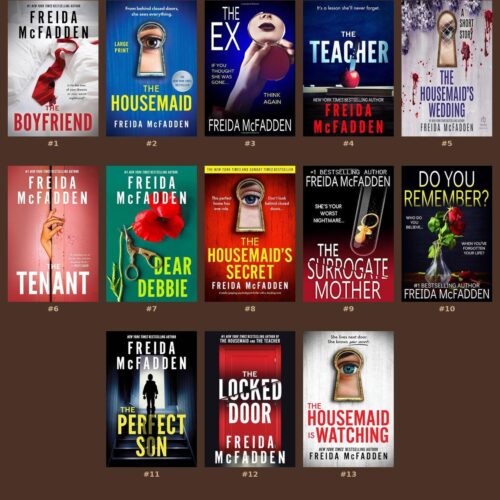
#1 — The Boyfriend

The Boyfriend follows Sydney, a woman with terrible luck in dating who finally thinks she has found someone worth keeping. Her new boyfriend Tom seems perfect on paper. But as small unsettling things start to stack up, Sydney begins to wonder if she is the one in danger or if history is about to repeat itself in the worst possible way.

I went into this book fully convinced I already knew what was happening. I had my suspect locked in from early on, I was reading with that smug energy of someone who thinks they have already figured it out. And then Freida McFadden completely humbled me. I did not see the ending coming at all and that almost never happens to me with her books. What made this one stand out beyond the twist is the premise itself. A serial killer storyline woven into a dating thriller is such a smart combination and it kept me locked in from start to finish. This one is my number one for a reason.

#2 — The Housemaid

The Housemaid introduces us to Millie, a woman with a complicated past who takes a job as a live-in housekeeper for the wealthy Winchester family. What starts as a fresh start quickly turns into something much darker as Millie realizes the picture-perfect family she is working for is hiding some very disturbing secrets behind closed doors.

Yes, this is the cliche pick. Yes, everyone loves The Housemaid. Yes, they made it into a movie and the casting had me ready. But here is why it earns the number two spot for me. The tension in this book is slow burning and strange. Not a lot is happening on the surface but there is just enough weird energy to keep you uncomfortable the entire time. And then when the story shifts and things start rolling, it hits. It reminded me a lot of The Last Mrs. Parrish by Liz Constantine, which I have also reviewed here on the blog and which happens to be another one of my all time favorite thrillers. If you loved that one, The Housemaid is essential.

#3 — The Ex

The Ex follows Cassie, a woman who thinks she has finally found the perfect man in Joel, a charming doctor. She knows about his ex-girlfriend Francesca, the beautiful and beloved chef that everyone assumed Joel would end up with. But Cassie is not worried because Francesca is out of the picture. Or is she?

I was semi confused for a good portion of this book and I mean that as a compliment. The kind of confused where you keep turning pages because you need things to make sense. And then everything comes to a head at the end and it all clicks into place in a way I genuinely did not see coming. The twist felt original and earned rather than forced, and that is rare enough to be worth celebrating. This one flew under the radar for me going in and ended up being one of my favorites.

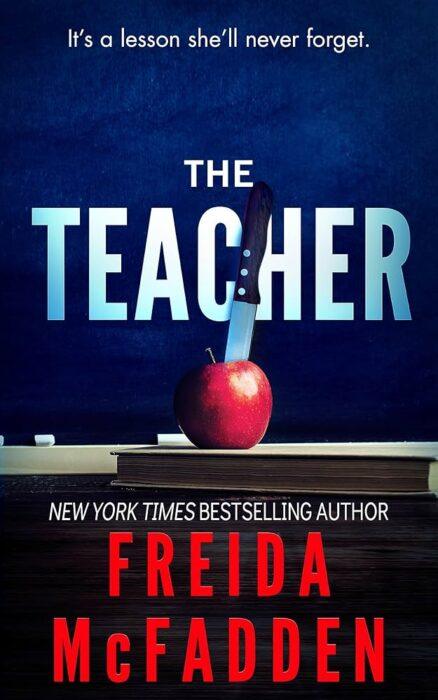
#4 — The Teacher

The Teacher is set at Caseham High School and told from two perspectives. Eve is a math teacher who seems to have a good life with her husband Nate, who also teaches at the school. Then there is Addie, a student who has been ostracized since last year when a scandal involving a teacher-student relationship got a teacher fired. Addie swears nothing happened. Eve is not so sure. And as their stories collide, it becomes clear that neither woman is who she appears to be.

Full disclosure, I used to be a teacher so I came into this one with a personal investment. I want to flag for readers that the teacher-student relationship element is present in this book. Nothing explicit because Freida keeps her thrillers relatively family friendly in that regard, but it is there and worth knowing going in if that is something that affects your reading experience. That said, the twist in this one is genuinely wild and the ending had me sitting with my mouth open a little. I remembered finishing it and thinking, wow, that was really something. Loved this one.

Update: Even better news, while researching for this blog post I saw that Apple is developing this one into a movie! I’m super excited for this one friends!

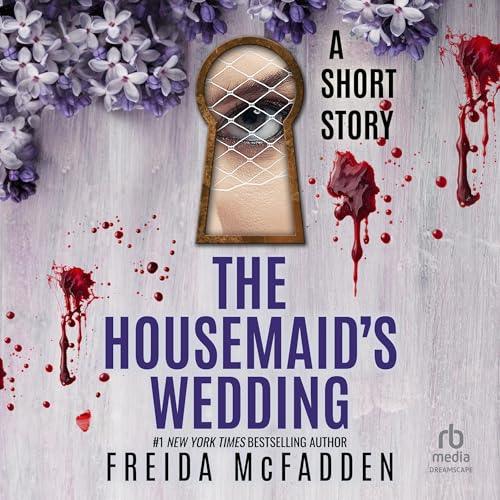
#5 — The Housemaid’s Wedding 

The Housemaid’s Wedding is a short story that follows Millie and Enzo as they prepare for their wedding. It gives readers a look into Millie’s past and the life she is finally building for herself after everything she has been through.

I do not usually gravitate toward novellas but I knew I needed to read this one before diving into the final Housemaid book and I am glad I did. It is a short read but it gave me everything I wanted as a fan of Millie’s journey. Getting that peek into her history and seeing her in a moment of genuine joy made this feel like a satisfying pause in the series. A great quick read for anyone who is invested in the characters.

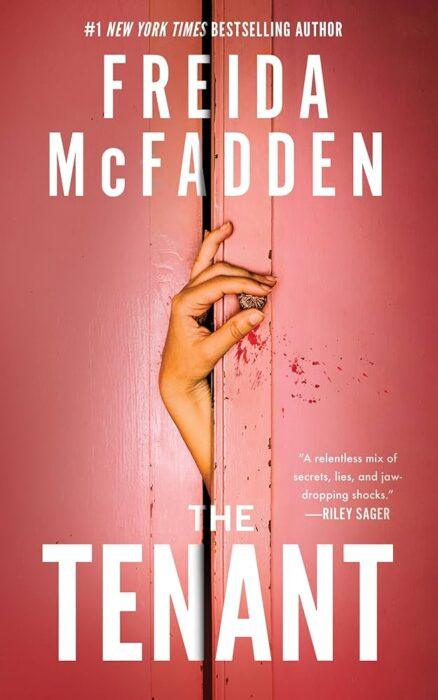
#6 — The Tenant

The Tenant follows Blake, a man who loses his VP job and can no longer keep up with the mortgage on the townhouse he shares with his fiancée Krista. Desperate to make ends meet, they take on a tenant named Whitney. She seems perfect at first, or is she?

I figured out the twist toward the end of this one but honestly it did not matter because I enjoyed every single minute of getting there. This is a solid, well-paced thriller that does exactly what it promises. I actually think this one would translate beautifully as a streaming movie. It has that contained, claustrophobic energy that works really well on screen. One of her newer releases and a strong one.

Update: A little birdie (my research lol) has told me that Amazon MGM studios bought the rights for this one, we might see this adaptation soon!

#7 — Dear Debbie

Dear Debbie follows Debbie Mullen, an advice columnist who has spent years listening to women describe bad marriages and difficult situations and offering them guidance. When Debbie decides to take matters into her own hands in a very direct way, the story takes a sharp and satisfying turn.

I actually wrote a full review of this one on the blog so make sure you check that out here. What I will say here is that this book surprised me. It has a dark humor running through it that I did not expect to work in a thriller and I honestly thought I would not like it. I like my thrillers serious. But the humor fit the premise perfectly and it never undercut the tension. This is also one of the first Freida books where you know from the beginning that the main character is not exactly innocent, and yet you understand every single decision she makes and you are rooting for her the whole way through. The ending was satisfying in the best way.

Update: Great news on this one, we will be getting this adaptation soon with Amazon MGM Studios! Read about it here.

#8 — The Housemaid’s Secret

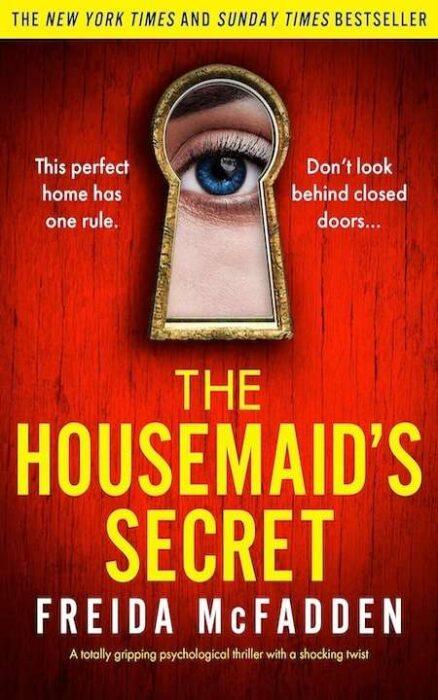
The Housemaid’s Secret picks up after the events of the first book with Millie now working as a cleaning woman. When she starts to suspect that one of her wealthy clients, a woman named Wendy, is being abused by her husband Douglas, she decides to intervene and help her escape. But nothing about this situation is what it appears to be, and Millie quickly realizes she has walked into something far more dangerous than she bargained for.

Honestly, I think this one suffered for me because the first Housemaid book set such a high bar that I kept holding it up for comparison and that is not entirely fair. On its own it is a good read with a solid premise and an adequate twist. It just did not leave me with that same feeling that book one did. This might actually be one I revisit on a reread because I have a feeling my opinion could shift when I am not measuring it against the original. We will see.

#9 — The Surrogate Mother

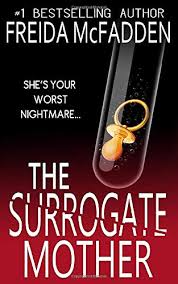
The Surrogate Mother follows Abby, a woman desperate for a baby after years of failed fertility treatments and a fallen-through adoption. When her personal assistant Monica offers to be her surrogate, Abby thinks her dream is finally coming true. But as the pregnancy progresses, Abby starts uncovering disturbing truths about Monica and realizes that nothing about this arrangement is what it seemed.

This one had a great premise and solid writing and it moves at a good pace. It is the kind of book that works perfectly as a quick Sunday afternoon read when you want something engaging but not necessarily life changing. Not every thriller needs to leave you wrecked and this one delivers exactly what it sets out to do. A good book, just not one that stuck with me the way some of her others did.

Update: Wow Freida is really out here killing it! Another proposed adaption from Sony!

#10 — Do You Remember

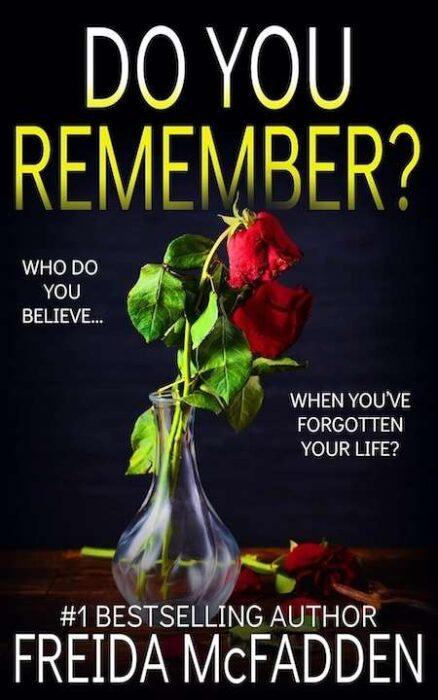
Do You Remember follows Tess, a woman who wakes up unable to recognize her own face, her home, or the man who claims to be her husband. A letter written in her own handwriting tries to explain the situation but when a text shows up warning her not to trust the man she is supposed to love, everything begins to fall apart.

My partner and I have actually had debates about this one, which tells you it sparks something worth talking about. Here is my honest take. The people around Tess are deeply untrustworthy and that tension kept me reading. But I was genuinely upset when the twist turned out to be what it was because I felt like it could have been something more thrilling. I am historically not a fan of the memory loss or groundhog style of storytelling, with the exception of the Hulu movie Palm Springs which is just excellent, and I found myself getting a little bored in the middle. That said I appreciated the ending for what it was and I understand why a lot of people love this one. Not every ranking is going to land the same for every reader.

#11 — The Perfect Son

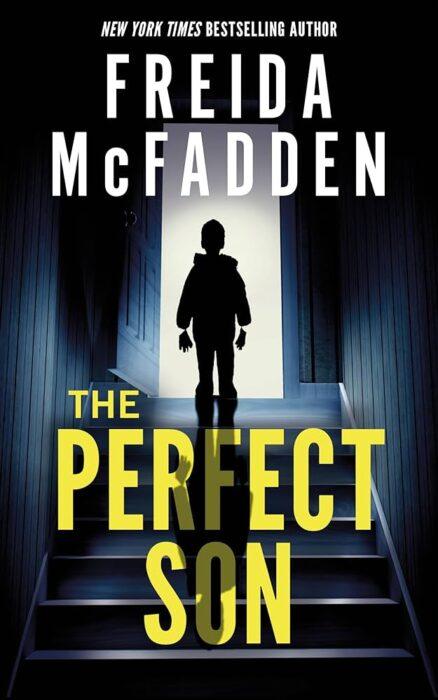
The Perfect Son follows Erika, a mother who has always believed her son Liam is exactly what the title says. When a girl Liam was seeing goes missing and the police show up at her door, Erika is forced to consider a possibility she has been refusing to look at directly.

This is a lifetime movie in book form and I mean that with full affection. It is your classic, well-constructed domestic thriller with a premise you have seen variations of before. What makes it interesting to me personally is that this was actually the first Freida McFadden book I ever read and it is what sent me down the rabbit hole of reading everything else she has written. It is a great starting point if you are new to her work and want to ease into the style before hitting her best stuff.

#12 — The Locked Door

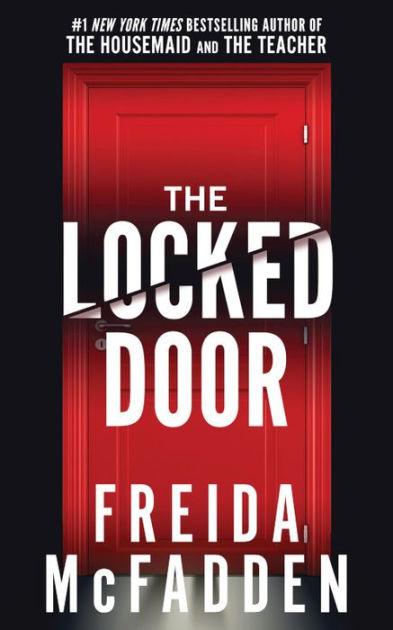
The Locked Door follows Nora, a surgeon who has spent her entire adult life trying to outrun her past. When she was eleven years old her father was arrested for being a serial killer. Decades later she has built a quiet, controlled life and nobody knows who her father is. Then one of her patients is murdered in the exact same manner her father used to kill his victims. Somebody knows who Nora is. And somebody wants her to take the fall.

I went into this one with high expectations based on the premise and came out feeling like it did not quite deliver what I was hoping for. I liked that Nora is sharp and self-aware, which made her easy to read. There was a twist that I thought was cool. But I genuinely struggled to locate where the thrill was for most of this book. It just did not connect with me the way I wanted it to. Not a bad book at all, just not the book for me.

#13 — The Housemaid Is Watching

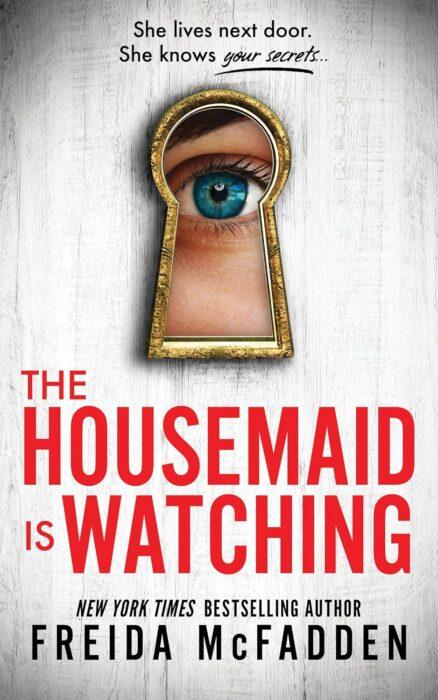
The Housemaid Is Watching is the final installment in the Housemaid series. Millie and Enzo are now settled into suburban life with their family, but strange and unsettling things start happening in their new neighborhood. The threat this time feels closer to home than ever before.

Out of every Freida McFadden book I have read, this one landed at the bottom for me. I finished the series because I love Millie and Enzo and I genuinely wanted to see their story through. And there are moments in this book that I appreciated, particularly anything centered on their family dynamic. But the thriller itself felt rushed and underdeveloped to me. The tension was built more on memory and perception than on concrete events, which made it feel less grounded than her other work. I also want to flag that this book touches on child abuse, which some readers may want to know going in. It was an okay read but as a series finale it did not hit the way I hoped it would.

Where Should You Start?

Here is my genuine recommendation: do not feel pressured to read in order or to start at the top of my list. Start somewhere in the middle or toward the bottom and work your way up. Let yourself build up to the best ones. There are no rules here. We are all just out here reading and having a good time. Pick whichever premise sounds most interesting to you and go from there.

As for me, I still have a few of her books left to get to and I am thinking about making my way through the ones I have not read yet. I have also been giving other women authors a try lately and I am loving expanding my reading list beyond one author. 

Interested in reading more Ashley Jane Lit Reads? Try this book review about Do What Your Godmother Says by L.S. Stratton! Definitely a good thriller!

How to Host a Thriller Book Club That People Actually Want to Come Back To

How to Host a Thriller Book Club That People Actually Want to Come Back To

You finish the book at midnight. The twist is still rattling around in your head. You have questions, theories, things you need to say out loud to someone who has also read it. That is the whole point of a book club, right?

Except most book clubs do not actually get there. Someone summarizes the plot for twenty minutes. A few people nod politely. Nobody really disagrees about anything. Then you pick next month’s book and go home feeling like something was missing.

Thriller book clubs specifically have this problem because psychological thrillers are designed to mess with you individually. The unreliable narrator, the twist you either called or completely missed, the moral gray area you are not sure how you feel about. That experience is deeply personal. And getting a group of people to actually open up about it takes more than just showing up with wine and a list of questions you found on Google.

Here is what actually makes a thriller book club worth coming back to.

Pick the right book for the right group

Not every psychological thriller works for every group. Some books are slow burns that reward patient readers. Some have content that will make certain members genuinely uncomfortable. Some have twists so divisive that half your group will love it and half will feel cheated.

Before you commit to a book, think about who is actually in your group. Is this a crowd that loves dark, disturbing content or do they prefer tension without graphic material? Do they like to argue about endings or do they want something everyone can agree was good? A book that lands perfectly for one group can completely derail another.

It also helps to know the subgenre you are working with. Domestic noir sits differently than a true crime adjacent thriller. An unreliable narrator book requires a different kind of conversation than a procedural mystery. Knowing what type of thriller you are picking means you can set expectations for your group before they even start reading.

If you are looking for a good starting pick, Freida McFadden is always a safe bet for a group that wants something to argue about. My review of Dear Debbie breaks down exactly why it works so well for a group discussion.

The best book pick is not the most popular one. It is the one that is going to give your specific group the most to say.

Do not wait until the meeting to think about what to discuss

The host who does the most prep has the best meeting. That is just the reality.

Before your group gets together, sit down and think through the book seriously. What are the three most important things that happen? Where is the real pivot point, the moment everything shifts? What clue did most readers probably miss on first read? What is this book actually about underneath the plot?

That last question is the one that unlocks the best conversations. Every good psychological thriller is about something beyond its twists. Trust. Control. How well we actually know the people closest to us. Grief. Obsession. When you can name that theme, you can steer the group toward discussions that feel meaningful instead of just recapping what happened.

Also prepare a few things to say if the conversation dies. Every host needs these. A question that reframes the whole book, a take that is slightly controversial, a specific scene to revisit. Have them ready and you will never sit in awkward silence.

Send something to your group before the meeting

One of the most underrated moves a host can make is sending a short note to the group two or three days before you meet. Nothing long. Just three or four questions to think about.

Did you trust the narrator from the beginning? When did that change? Who was your number one suspect? What was your actual reaction when the twist landed?

Members who arrive having already thought about the book show up differently. They have opinions ready. They have noticed things they want to bring up. They are not starting from zero when they walk in the door. That pre-meeting email costs you five minutes and completely changes the energy of the first twenty minutes of your meeting.

Members who arrive prepared make your job as a host ten times easier. A short preview message is the cheapest investment you can make.

Never open with a plot summary

This is the number one thing that kills a thriller book club meeting before it starts. Someone starts explaining what happened in the book to the group of people who all just read the book. Everyone zones out immediately.

Instead, open with something that gets a reaction right away. Go around the table and have everyone say one word that describes how they felt finishing the book. Just the word, no explanation yet. Then ask why. You will have a real conversation in under two minutes.

Or start with a show of hands. Hands up if you saw the twist coming. Hands up if you were completely blindsided. Then ask a few of each to explain. The disagreement is instant and it is genuine.

The goal of your opener is to skip the small talk and get straight to the part where people actually have different opinions about something. Thrillers are perfect for this because the twist alone guarantees that not everyone had the same experience reading the book.

Have a plan for when the conversation stalls

Every meeting hits a moment where things slow down. Somebody has said their piece, a few people have agreed, and now the energy drops. This is not a failure, it is just a natural pause. A good host knows exactly what to do with it.

The move is usually a reframe. Instead of asking what happened next, ask what it meant. Instead of asking if someone liked the book, ask what it says about trust, or about how we decide who to believe. Instead of letting everyone agree that the villain was terrible, ask someone to make the strongest possible argument for why the villain was justified.

You can also use the book’s craft as a conversation pivot. Ask the group whether they noticed the author rationing information to keep them hooked. Ask where they felt the unreliable narrator slipping. Ask what the dual timeline was hiding and whether they caught it. Most readers experience these techniques without naming them, and once you name it out loud the whole discussion shifts to a different level.

A good flow guide means you never have to improvise. You just reach for the right move at the right moment.

Make sure everyone reacts to the twist before anyone else speaks

Here is something that makes a genuine difference in how a twist conversation goes. Before you let the group start discussing it, go around the table and have every single person answer three questions in order, without anyone else responding until the round is complete.

Did you see it coming? What was your first thought the second you hit the reveal? Does the twist make the book better or does it feel like it came out of nowhere?

No interrupting until everyone has answered. This sounds like a small rule but it matters because once one or two people share their reaction, everyone else unconsciously adjusts to match the group. You lose the genuine range of reactions that way. The person who saw it coming early and the person who was completely blindsided have completely different things to say, and you want both of those voices before the conversation collapses into consensus.

Go deeper than whether people liked it

The conversations that people remember and come back for are the ones where something clicked, where someone named a thing they had been feeling about the book without being able to say it.

One of the easiest ways to get there is to look at the craft of the book itself. Great psychological thrillers use specific techniques to manipulate the reader. Gaslighting you about what is real. Dramatic irony where you know something a character does not. Trauma as misdirection. A character who is too perfect for too long. Information rationed so precisely that you keep turning pages even when you are not sure why.

When you walk your group through that list and ask which ones they noticed happening to them, the whole conversation changes. It stops being about whether the book was good and starts being about how it worked on them specifically. That is the kind of discussion people talk about afterward.

The host kit that does all of this for you

Everything covered in this post, the book selection, the member prep, the opening moves, the flow guide, the twist roundtable, the technique breakdown, plus a post-meeting log, a group rating card, a next book selector, and a reading history tracker, is inside the Thriller Book Club Host Kit.

It is a 23-page printable PDF built specifically for psychological thriller book clubs. Genre-wide, so it works for any thriller your group picks. Freida McFadden, Shanora Williams, Lisa Jewell, Angela Henry, whatever you are reading next.

Get the Thriller Book Club Host Kit in the Ashley Jane Shop.

Your group deserves a meeting they actually talk about afterward. This kit makes that a lot easier to pull off! Happy Book Club Planning!

You Are Not Bad With Money. The Math Just Does Not Work Anymore.

You Are Not Bad With Money. The Math Just Does Not Work Anymore.

I paid a few hundred dollars toward one of my credit cards. Felt good about it. Went to bed.

Woke up the next morning and the interest had already come through. A couple hundred dollars. Just like that. Gone. Like the payment I just made barely even counted.

I wanted to scream. And I know I am not the only one who has typed “why can’t I get ahead financially” into Google at midnight because the numbers just are not adding up no matter what you do.

Not because you did something wrong. Not because you are irresponsible. Because you are doing the thing you are supposed to do and the numbers are still moving in the wrong direction. That feeling of doing everything right and watching it not matter is one of the most frustrating things I have ever experienced with money. And I know I am not the only one sitting with it.

The Story We Were Told Does Not Add Up Anymore

We grew up with a pretty clear script. Work hard. Get educated. Get a good job. Pay your bills on time. Stay out of trouble financially and you will be fine.

Nobody updated the script when the cost of everything started climbing and the paychecks did not keep up. Nobody told us that doing it all right could still leave you behind. That you could have a real job, a real income, real intentions, and still be watching your debt barely move while the interest keeps stacking.

That is not a character flaw. That is just math that was never set up in your favor.

Groceries cost more. Rent costs more. Gas costs more. Everything you need to just exist is more expensive than it was a few years ago. And if your income has not grown at the same rate, which for most people it has not, then you are already starting every month in a hole you did not dig yourself.

Add debt with real interest rates into that picture and the math gets even uglier. You make a payment. Interest charges. You make another payment. Interest charges again. It feels like you are running on a treadmill that keeps speeding up no matter how hard you push.

Why It Feels Like Drowning

There is a specific kind of hopeless that comes from trying and not seeing it work. It is different from not trying. When you are not trying you can at least tell yourself that things would be different if you did. But when you ARE trying, when you are making the payments and watching the numbers and doing the thing, and it still feels like nothing is changing?

That is when the spiral starts. Maybe I am just bad with money. Maybe I will always be in debt. Maybe this is just what my life is. I have been in that spiral, shoot I’m still in that spiral. It is a lying spiral. It takes real circumstances, real economic pressure, real systemic garbage, and turns it into a story about your worth. And once you are in it, it is hard to see clearly enough to figure out what would actually help.

You are not drowning because you are doing it wrong. You are drowning because the water level keeps rising and nobody warned you to get a boat.

What Is Actually Happening With That Interest

When I saw that interest charge come through the morning after my payment I had to just sit with it for a minute. Because it genuinely felt like a punishment for trying.

That is kind of exactly what high interest debt is. It is a system designed to make sure that the longer you are in it the harder it is to get out. The minimum payment is calculated to keep you in the cycle as long as possible. The interest compounds in a way that is specifically designed to work against you if you do not have a strategy.

It is not personal. The credit card company is not targeting you specifically. But it is also not an accident. It is working exactly as designed. Which means getting out of it requires working against the design on purpose. That takes a system. Not willpower. Not shame. A system!

What I Want You to Take From This

You are not bad with money.

You are a person trying to manage money in an economy that has gotten genuinely harder to navigate. You are dealing with interest rates and inflation and stagnant wages that have nothing to do with your discipline or your worth.

The frustration you feel is valid. The wanting to scream is valid. The feeling of being stuck in a cycle you cannot figure out how to break is valid. But stuck is not the same as permanent.

If you are at the point where you are ready to stop just surviving the cycle and start building something to fight back against it, I wrote about exactly that. The Broke Tax is what I built for myself when I got tired of watching my payments disappear into interest and needed something that could actually hold the whole picture in one place. It is not a magic fix. Nothing is. But it is a system, and a system is what the math actually requires. You can check out that system here.

If you are not ready for a system yet, that is okay too. Sometimes you just need to know that someone else is frustrated and in it and still going. I am here. I am documenting all of it. You are not alone in this!

The Broke Tax Is Real. Here Is What I Built to Fight Back Against It.

The Broke Tax Is Real. Here Is What I Built to Fight Back Against It.

There is a thing that happens when you carry debt long enough that nobody really talks about. You stop being broke because of a bad decision. You start being broke because of math. The interest charges, the late fees when things stack up wrong, the overdraft you did not see coming because you forgot about that automatic payment. None of it feels like a mistake anymore. It just feels like the way it is.

That is the Broke Tax. The invisible surcharge that gets added to your life when your debt load is heavy enough that you cannot quite get ahead. You are paying more than you owe because you owed it in the first place.

I tried to do it right. The way they told me to. Go to college, get a job, get the graduate degrees so you can get the raise. Do all of that and you still end up in debt. Deep debt. And do not even get me started on the credit cards. Every payday my check was disappearing into bills and payments before I could blink, and I kept telling myself that something had to change.

So I made something, a system that I’m using that is starting to work.

What Being In Debt Actually Feels Like From Inside It

People talk about debt like it is mostly a math problem. Add up the balances, pick a payoff method, execute. And yes, eventually it is a math problem. But it does not feel like math when you are in it.

It feels like a cloud that follows you around. You are at a dinner with people you love and somewhere in the back of your brain there is a number running. You get a nice paycheck and for about twenty minutes you feel relief and then you remember what it has to cover. You want to do something for yourself, something reasonable and small, and you run a whole internal calculation before you let yourself have it.

I am irresponsible with money. I am surviving a season of life that cost more than I expect and taking the time to build a career that pays what I deserve. A lot of people reading this are in exactly the same position. The debt did not happen because you are bad with money. It happened because life is expensive and income does not always catch up on schedule.

That is worth saying out loud because the shame of it is what keeps most people from actually doing anything. You cannot solve a problem you are too embarrassed to look at directly.

The Moment I Got Honest About the System I Was Missing

I had been doing the thing where I knew roughly what I owed but not exactly. Knew roughly what my bills were but not precisely. Knew I was supposed to be putting more toward debt but could not always tell you why the money was gone before I got there.

The problem was not discipline. I have plenty of that in other areas of my life. The problem was that I did not have a system. I was reacting to my money every payday instead of directing it. There is a huge difference between those two things and I spent longer than I want to admit figuring that out.

What I needed was something that could hold all of it in one place. Not a complicated budget. Not a spreadsheet that requires a finance degree to maintain. Just a clear, real, honest accounting of what I owe, what I make, and how every dollar gets assigned before I spend a single one of them. So I built it.

What I Made and Why I Made It This Way

The Broke Tax is the workbook I made for myself and then realized I needed to share because I know I am not the only person who needed it. It is 45 pages and it is not fluff. Every section does something specific.

It starts with a Debt Reality Check because you cannot work on something you have not looked at fully. Not the vague sense of what you owe. The actual number. Every balance, every interest rate, every minimum payment, written down in one place for the first time.

Then it walks you through picking a payoff method that actually fits your life, not just the one that is technically most efficient on paper. There is a big difference between the method that works in theory and the one you will actually stick to for two years.

The Paycheck Assignment section is the part I use every single payday. You assign every dollar of your check before you spend anything. Bills, debt payments, essentials, and then whatever is left. It sounds simple. It changes everything.

There is a Short Paycheck Protocol for the months when things get tight, a Spending Audit that is not judgmental, an Income Unlock Plan for looking at what additional income might actually be realistic for your life, a full monthly progress tracker, and a 30-day kickstart plan to get you moving in the first two weeks.

It also has motivational pages because I know that the mindset piece is not separate from the strategy piece. You will not follow through on a plan you do not believe in. The workbook accounts for that.

Who This Is For

This is for the person who makes decent money and still feels broke. The person who knows they need to deal with the debt but has been putting off really looking at it. The person who has tried budgets before and found them unsustainable.

It is not for someone in a financial crisis who needs a credit counselor. It is for someone who is stable, working, and ready to stop letting debt just happen to them every month.

If that is you, this is the thing I wish I had had two years ago.

The Broke Tax is a 45-page printable workbook available in my Gumroad shop for $17. It is also on Etsy. Print it once, use it for as long as you need it.

One More Thing

The Broke Tax is real. It costs you real money in interest and fees and the mental overhead of carrying debt that never seems to move. But it is not permanent and it is not a character flaw.

And if you have ever been told to just budget better, I already wrote about why that advice misses the point entirely. You just need a system that works for your actual life. This one works for mine.

If you have been putting off looking at the full picture, this is the nudge. Go grab the workbook. Do the Debt Reality Check page first. Just that one page will shift something. I know because it was the first time in a long time I felt like I actually knew what I was dealing with instead of just guessing. Still working on it, and I will be documenting everything right here as I go! 

I Have Three Types of Debt and a 9-to-5 That Does Not Cover All of It. Here Is What I Am Actually Doing.

I Have Three Types of Debt and a 9-to-5 That Does Not Cover All of It. Here Is What I Am Actually Doing

Nobody tells you this part. They celebrate the degree. They ask what is next. And somewhere in the back of your mind you are doing the math on what all of it actually cost. The tuition, yes. But also the credit cards you leaned on when money got tight. The personal loan that covered the gap. The student debt that was just supposed to be normal.

I did everything right on paper. I stayed in school, got the degrees, built the resume. I came out the other side with a 9-to-5 job I am grateful for and a debt load that does not quite match the life I thought I was building toward. Credit cards, a personal loan, student loans. The full set.

So here we are!

This post is not a success story with a clean ending. I am in it right now. Some months I hit my targets and some months something unexpected happens and I am recalibrating. What I can offer is a real system that is actually working, the mistakes I made before I figured it out, and the specific things I do every payday to keep moving forward without making myself miserable.

If you are dealing with multiple debts on an income that does not feel like enough, this is for you.

First, the Honest Picture of Where I Started

Before I could do anything useful with my debt I had to actually face what I owed. Not a vague sense of it. The real numbers.

I sat down with every account open and wrote four things for each debt:

  • The current balance
  • The interest rate
  • The minimum payment
  • The due date

That list was uncomfortable to make. It was also the first time I had been in the same room as my actual financial situation in a long time. Something about seeing it all on one page made it feel more like a problem to solve and less like a cloud of dread following me around.

If you have not done this yet, that is your first move. Not a budget. Not a debt payoff calculator. Just a list. Four columns, every debt. That is it.

The Three Rules I Set Before I Made Any Other Decisions

Once I had the full picture I made three rules for myself before I started building a plan. These came from watching myself fail at other attempts where I skipped this part.

Rule 1: Minimum payments are not negotiable.

Every debt gets its minimum payment every month before anything else happens. Missing minimums damages your credit score, adds late fees, and can trigger penalty interest rates that make your situation worse. There is no strategy worth risking this.

Rule 2: The plan has to include my actual life.

I am not going to stop buying books or cancel every social plan for two years to pay off debt faster. I have tried versions of that and they do not hold. A sustainable plan is one I can actually run month after month. So my budget includes real spending money for the things that matter to my quality of life. Not unlimited. But real.

Rule 3: Progress is progress, even when it is small.

On months where I can only cover minimums, that is what I do. Keeping everything current when that is genuinely all I can manage is not failure. It is maintenance. It keeps the situation from getting worse while I figure out the next move.

The System I Use Now

Every payday I do what I call a paycheck reset before I spend anything. It takes about fifteen minutes and it has changed how I relate to money more than any other habit I have built. Here is the short version:

  • Write down the actual amount that hit my account after taxes
  • Subtract every fixed bill and minimum payment due before next payday
  • Decide deliberately if there is any extra to throw at one target debt
  • Set my living budget for the rest of the pay period from what is left
  • Check in briefly at the end of each week to stay on track

That is it. No complicated spreadsheet. No tracking every coffee. Just a clear picture of what I am working with and a conscious decision about where it goes.

I go much deeper on this in the paycheck reset post, which is worth reading if you want the full breakdown.

How I Decided What to Pay Extra On First

With minimums covered the question becomes where to put any extra money. I use a hybrid approach.

I picked one target debt based on two things: the interest rate and how close it is to being gone. A debt that is nearly paid off and also has a high rate is a good early target because you get the psychological win of eliminating it and you stop the interest bleeding quickly.

I do not stress about optimizing this perfectly. The best debt payoff strategy is the one you actually stick with. If seeing a balance hit zero keeps you motivated, pay the smallest first. If knowing you are saving the most money long term keeps you going, attack the highest rate. Either works better than doing nothing.

One More Thing About Having Multiple Types of Debt

Credit cards, personal loans, and student loans all behave differently. Credit cards tend to have the highest interest rates so they cost you the most the longer they sit. Personal loans usually have fixed terms so you know exactly when they end. Student loans have the most options, including income-based repayment plans and pause options, depending on your situation.

Understanding the type of debt you have changes how you prioritize it. I always recommend calling your student loan servicer directly if you are struggling because there are more options available there than most people know about.

Where to Start If You Are Just Getting Here

Make the list. Four columns, every debt, today. Not tomorrow. Today.

Then come back and read the paycheck reset post because that is the habit that actually moves everything forward. Everything else in High Debt builds from that foundation.

This is a slow process. It is not linear. But it is absolutely possible on a regular income without extreme sacrifice, and that is exactly what I am proving month by month.

The Paycheck to Debt Decision Planner in the shop is the three-page tool I use for my payday reset every single month. It is $5 and you can use it starting this paycheck.